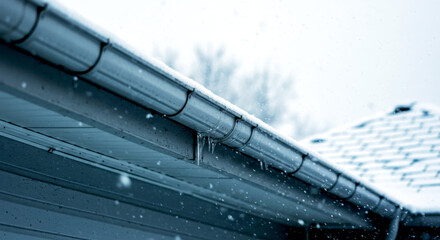
Colorado Springs Gutters are the first line of defense against ice dams, leaks, and basement flooding. Clogged or damaged gutters can impede water flow and lead to expensive repairs during the freeze-thaw cycle.
Leaves, pine needles, and twigs can clog gutters and downspouts, trapping moisture that freezes and expands as it gets colder. This can strain gutter hangers and pull them loose from the roofline.
Clean the Gutters
Clogged gutters can impose a lot of weight onto the fascia and soffit. This extra weight is a recipe for leaks, water intrusion, and even foundation damage. It’s easy to prevent these issues by keeping your gutter system clear of debris and free of ice dams.
First, use a garden hose to flush the gutters. You can also check for a clog by looking at the gutter from the ground and checking the downspouts for standing water. If you notice a clog, remove the clog with a gutter scoop. If you find any sagging gutter sections, attach additional support hangers. This will reduce the stress on the gutters and prevent them from falling off of your home.
Once you’ve removed all of the debris and ice, take a look at your gutters to see how they’re holding up. Any sections that are pulling away from the house should be reinforced with gutter hangers or sectional gutters should be reconnected to the fascia with new gutter screws. If you’re not able to fix the issue now, you may need to consider replacing your gutter system completely.
Inspect your gutters for wear and tear, as well. Look for loose sections and cracks, especially at seams and the end caps. Also, look for sagging sections that are pulling away from the roofline or gutter brackets. These issues will become more serious once the winter arrives.
Finally, look for overhanging tree branches that could fall and disrupt the drainage system or cause a clog. It’s best to trim these overhanging branches now to prevent them from damaging your gutters during a storm.
Another important factor in gutter function is the slope of the gutters and downspouts. You want the gutters to be pitched at a slight decline toward the downspout to ensure that all of the water drains through it rather than pooling at the eaves. If you’re not sure how to adjust the slope of your gutters, you can ask a professional to help. They’ll start by creating a chalk line to demonstrate the angle and then make adjustments using the appropriate tools.
Inspect the Gutters for Damage
Gutters are often the frontline of your home’s defenses against snow and ice. As a result, they face significant stress from these elements, and they can experience clogs, sagging, and damage if homeowners don’t prepare them correctly. Winterizing the gutter system is a proactive step to prevent costly repairs later.
Ineffective gutters allow water to pool around the foundation, causing hydrostatic pressure that can damage the concrete and wood. Ineffective gutters also direct water towards the walls and roof, which can cause problems such as bowing or cracking walls (see this article for tips on how to repair these issues).
Gutter damage is a common problem that affects many homes. It can be caused by storms, aging or poor design, and it can lead to leaks, overflows, or other structural issues. Homeowners need to regularly inspect their gutters for signs of wear and tear, including loose hangers, separated seams, and sections that are pulling away. Inspecting the gutters is an essential part of preparing them for winter weather, and should be done before the first freeze.
In addition to checking for damage, homeowners should inspect the gutter slope and downspout placement to ensure that they are directing water away from the house. The slope of the gutter is important because it can help to keep water from backing up under the shingles and causing roof leaks. Gutter slope is typically measured with a slope gauge or by eyeballing the distance between the downspout and the fascia of the home.
Lastly, homeowners should consider installing gutter guards to minimize the accumulation of debris, and they should check their attic insulation and make sure that it is adequate to avoid ice dams in winter. While these steps will significantly reduce the risk of winter gutter damage, homeowners should also plan to perform other maintenance tasks like cleaning the chimney, draining hoses, and testing fire alarms before cold weather arrives. Follow common-sense safety precautions and enlist a spotter when using ladders to access the roof and gutters, and always exercise caution when climbing on roofs.
Reinforce Weak Spots
The gutter system plays a vital role in directing rainwater away from roofs, siding, and foundations, protecting homes against everything from basement leaks to soil erosion. But the gutters are prone to wear and tear that requires regular maintenance and repair to ensure they function properly. If left unchecked, these issues can turn into costly problems that can damage the home’s structural integrity and lead to expensive repairs.
The most common gutter issues, such as holes and cracks, can be repaired with waterproof caulking or gutter sealant, applied to the leaking areas to create a watertight seal. However, in some cases, a leak may be more severe and require gutter patching to ensure the area is fully sealed. Leaks and weak spots are especially a concern for homeowners with older or more porous gutter systems, as these types of gutters tend to have more trouble with water leakage.
Steel gutters, for example, are prone to corrosion and rust that can eat away at the interior of the gutters, eventually creating a hole or a sagging section. The good news is that rust usually occurs as a light surface rust, which can be sanded off and coated with a rust-resistant paint. This can help restore the look and extend the life of the gutters. But if the corrosion is more widespread, or the gutter sections are falling apart, replacing them with aluminum or vinyl seamless gutters that are rust-proof is often the best solution.
Gutter slope, or the angle that the gutters slant downward, is another essential part of the overall functionality of the system. If the gutters aren’t positioned at a proper angle, water may pool inside and back up under shingles or down the sides of the house, potentially causing rot. Regular inspections and gutter slope adjustments can help to identify weak points that need reinforcement.
Sagging sections of the gutter can be strengthened by installing additional support brackets in weakened areas to boost overall stability. This is a simple job that can be completed by a qualified gutter professional and should be done regularly to prevent future sagging and other structural issues with the system.
Upgrade Your Gutters
Gutter systems are a critical part of your home’s exterior drainage system. But they can become damaged during Minnesota’s harsh freeze-thaw cycles. Clogged or misaligned gutters lead to water intrusion into roofs, walls, and foundations, damaging the structural integrity of your house and necessitating expensive repairs. The best way to protect your gutters is through proactive maintenance before the cold weather sets in. By following a regular cleaning schedule, inspecting for damage, and adjusting downspout placement, you can ensure that your gutters can effectively drain water throughout the winter.
Gutters can be clogged with leaves, branches, twigs, and other debris that slows the flow of water down the pipe. To avoid clogging, you should consider installing a premium micromesh gutter guard. These guards have a hood that is designed to keep out debris while allowing water to pass through. The hood also prevents the accumulation of ice and snow, which can contribute to the formation of ice dams. Gutter guards are available in a wide variety of colors and styles to suit the aesthetics of your home.
Downspouts are the channels that guide rainwater and melting snow away from your house. When these channels are clogged, ice dams form and water seeps under shingles and along roof edges. It can also pool around the foundation and cause foundation problems. By adjusting the downspout grading to ensure that water flows at least 4 feet away from the house, and by adding extensions or splash blocks, you can avoid downspout clogs and basement moisture issues.
The most important step you can take to ensure that your gutters are ready for the winter is to install a premium ice-resistant discharge line protector. These guards have a special sleeve that is designed to protect the downspout from ice and snow buildup while still allowing water to pass through. This can dramatically reduce the risk of ice blockages and ensure that your gutters are able to discharge water safely through the winter.
By following these simple steps, you can prepare your gutters for the harsh Minnesota winter. These simple maintenance tasks will help prevent ice dams, clogged gutters, and water intrusion into the roof, walls, and foundation of your home.